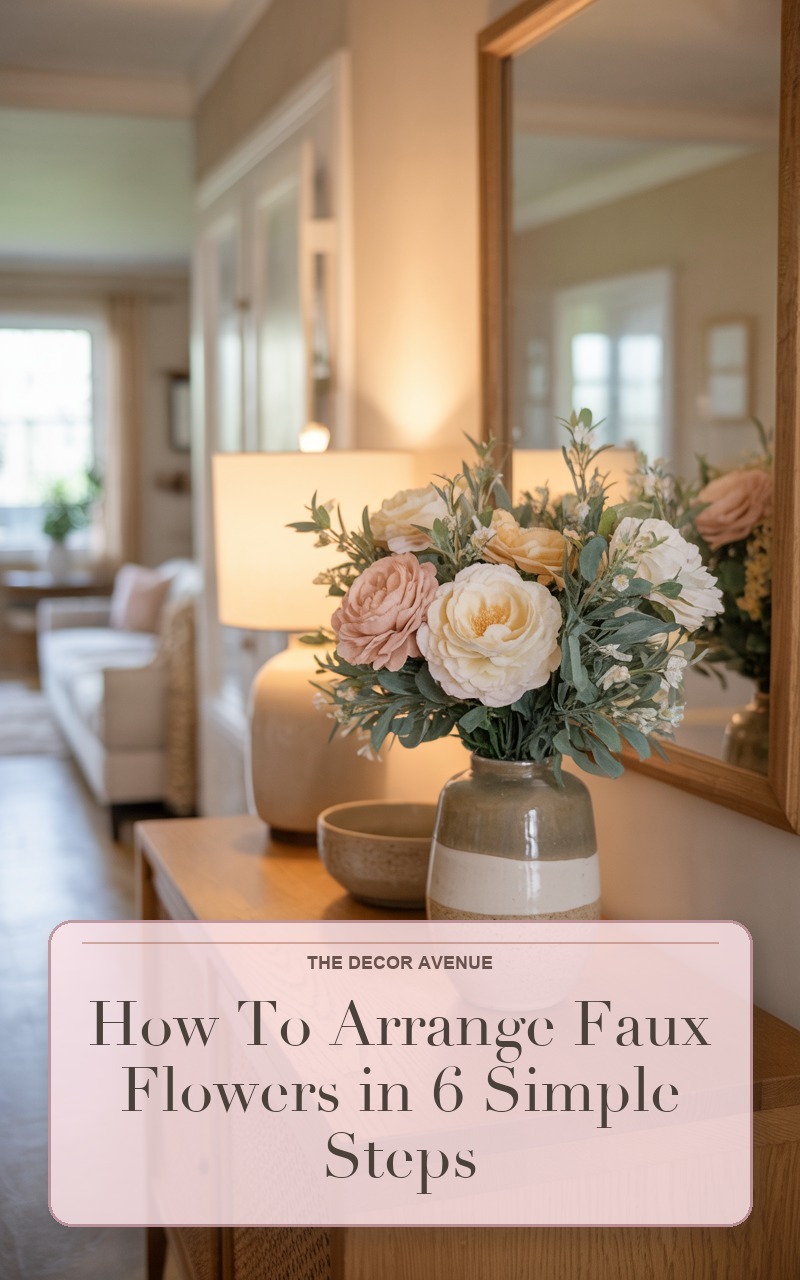
Faux flowers have come a long way from the stiff, shiny stems that used to give the whole game away. Chosen well and arranged with a little intention, they can bring softness, colour and shape to a room without wilting, dropping petals or demanding a fresh water change when you are already late.
This guide explains how to arrange faux flowers in six simple steps, from choosing a colour palette to styling the finished display. The goal is an arrangement that looks relaxed and natural, not like a bunch of stems pushed into a vase and told to behave.
Step 1: Choose A Simple Colour Palette
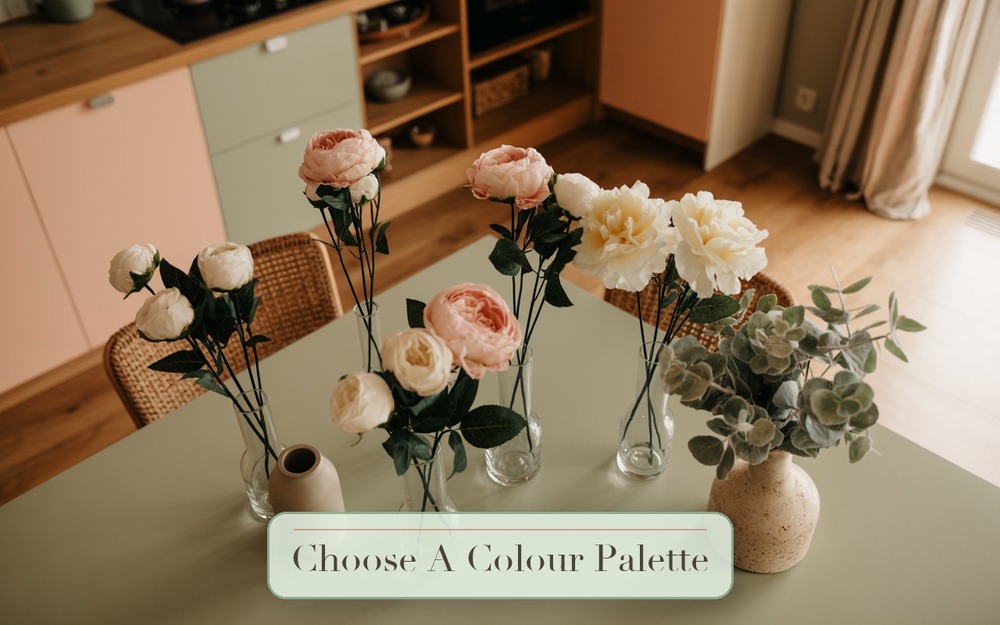
Start with colour before you think about shape. Faux flowers often look most convincing when the palette is restrained, because too many strong colours can make the arrangement feel artificial. Pick one main flower colour, one softer supporting shade and one foliage tone.
Blush, cream and sage is a gentle combination that works in bedrooms, living rooms and entryways. For a warmer look, try terracotta, ivory and olive. If your room already has strong colour, let the flowers echo one existing tone rather than introducing a completely new one.
If you are planning a wider refresh, handmade coaster ideas is worth keeping open alongside this guide.
- Use two or three colours at most.
- Mix lighter and deeper versions of the same shade.
- Let foliage act as a bridge between the flowers and the room.
If you are planning the arrangement around a wider room refresh, these home colour scheme ideas are a useful place to borrow direction.
Step 2: Pick The Right Vase
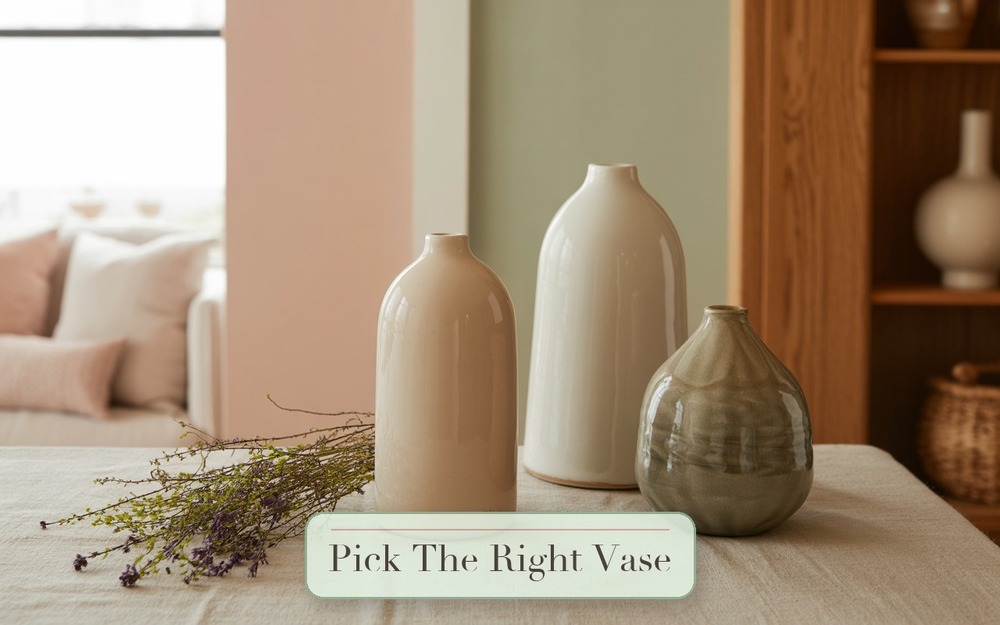
The vase does more than hold the stems. It sets the mood of the whole arrangement. A stoneware vase feels relaxed and earthy, clear glass looks lighter, and a tall ceramic vessel can make even simple stems feel more sculptural.
As a rule, the vase should be roughly one-third to one-half the height of the finished arrangement. If it is too short, the stems look top-heavy. If it is too tall, the flowers can disappear inside it. A narrower neck is easier for beginners because it holds stems in place without needing much support.
For an entry table or console, choose a vase with enough weight that it will not tip when someone drops keys nearby. For a dining table, keep the arrangement lower so people can talk across it without leaning around a floral hedge.
You can also borrow details from mantel decorating ideas when you are refining the final look.
Step 3: Shape The Stems First
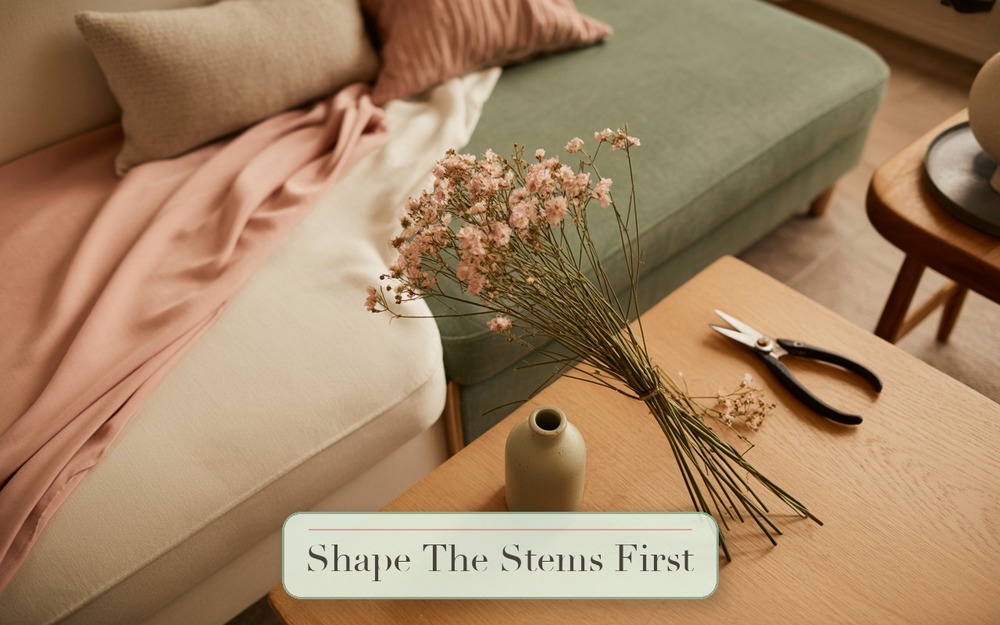
This is the step that makes faux flowers look more realistic. Real stems are rarely perfectly straight, so gently bend yours before they go into the vase. Curve some outward, lift a few upward and let others lean slightly to the side. You are trying to create movement, not chaos.
If the stems are too long, trim them with proper floral cutters or wire cutters rather than kitchen scissors. Cut a little at a time, then test the height in the vase. It is much easier to shorten a stem twice than to rescue one you cut too enthusiastically.
- Bend stems slowly so the coating does not split.
- Vary heights before adding flowers to the vase.
- Keep the most flexible stems for the outside edges.
Step 4: Build A Green Base
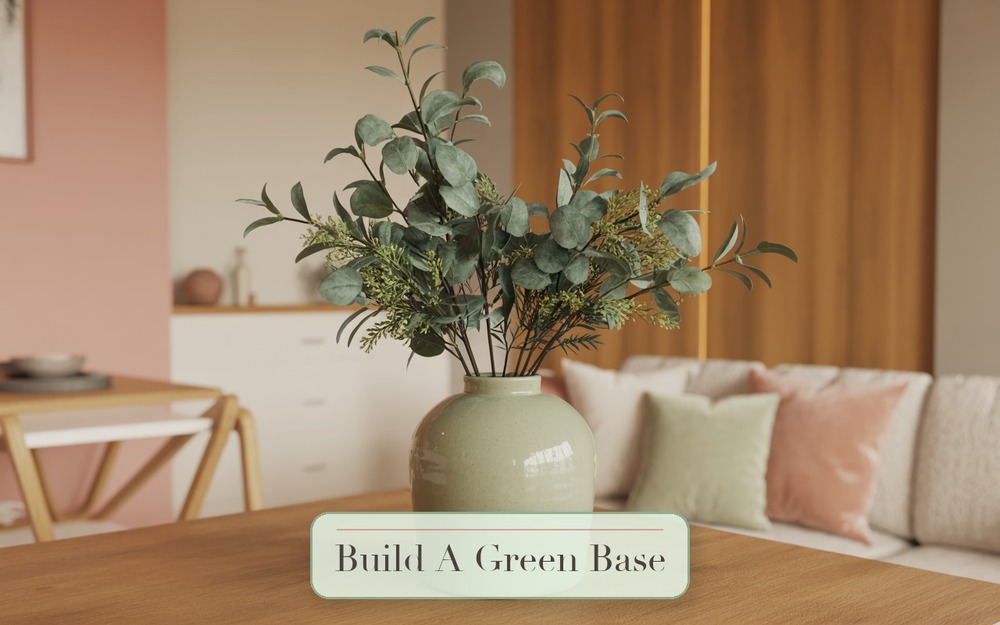
Foliage gives the arrangement structure. Add greenery first and spread it around the vase in a loose, uneven shape. Some pieces should sit higher, some should fall outward and a few can trail gently over the edge if the vase suits that look.
This base helps hide the mechanics of the arrangement and stops the flowers from looking like separate stems. Eucalyptus-style leaves, soft fern shapes and simple branches are especially forgiving because they add volume without stealing attention.
If you enjoy refreshing your home seasonally, faux greenery is also easy to reuse. Pair it with lighter stems in spring, richer tones in autumn and simple cream flowers through winter. These simple spring decor ideas offer more ways to use greenery without making the room feel busy.
For a related idea you can adapt in the same space, see summer wreath ideas.
Step 5: Add Flowers In Uneven Groups
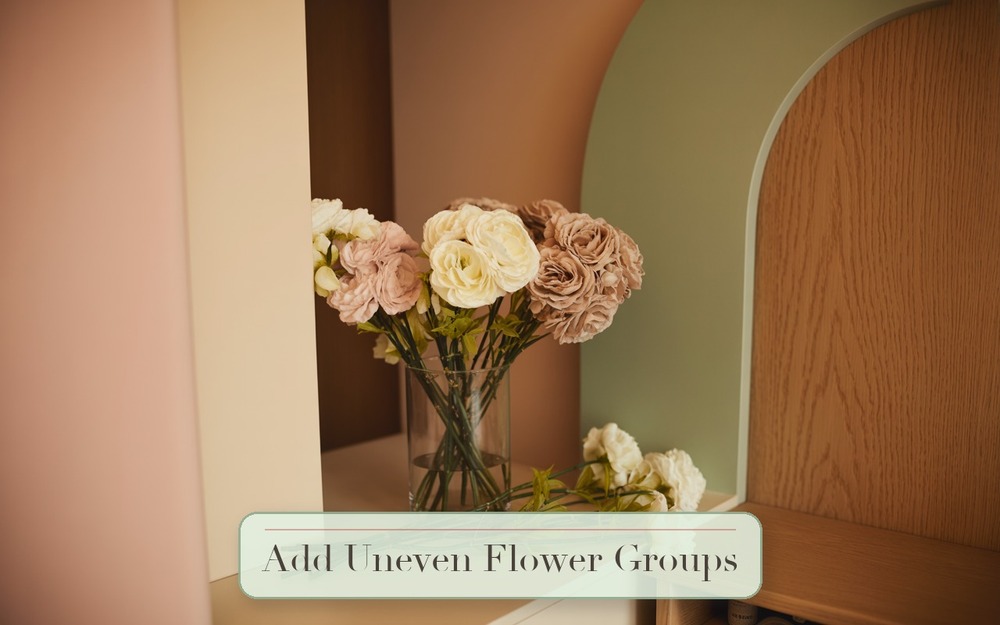
Now add the flowers, starting with the largest blooms. Place them in uneven groups rather than spacing everything perfectly around the vase. Odd numbers usually feel more natural, so try three larger flowers, five medium ones and a few smaller accents.
Turn the vase as you work and check the arrangement from the angle where it will be seen most often. A hallway display might need to look good from the front, while a coffee table arrangement should work from several sides. If one area feels heavy, move a bloom lower or add a lighter stem nearby.
For more surface styling ideas, these coffee table styling tips pair well with a low floral arrangement, especially when you want the flowers to sit among books, trays and candles.
Step 6: Style The Finished Arrangement
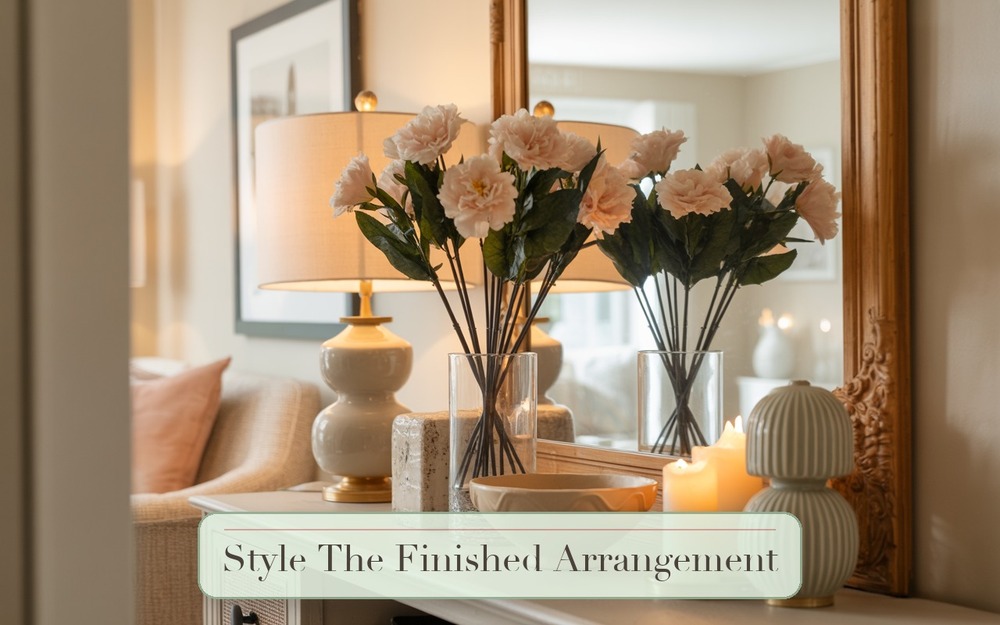
The final arrangement should feel connected to the surface around it. On a console table, add a lamp, bowl or small decorative object nearby so the flowers become part of a vignette. On a bedside table, keep the surrounding pieces minimal so the flowers do not fight with everyday essentials.
A useful next read is DIY spring decor ideas if you want another angle on this part of the project.
Step back and look for balance. If the arrangement feels too round, pull one stem higher. If it looks too stiff, bend the outer stems outward. If the colour feels too sweet, add a little extra greenery or a warmer ceramic piece nearby.
- Keep the surrounding decor lower than the flowers.
- Repeat one colour from the arrangement elsewhere on the surface.
- Dust faux petals regularly so the display stays fresh.
For more styling context, these console table styling steps are a natural companion. You can also browse RHS advice on cut flower choices for real-flower inspiration and Better Homes & Gardens flower arranging ideas for more shape and placement tips.
Final Thoughts
Arranging faux flowers is less about hiding that they are faux and more about treating them with the same care you would give real stems. Choose a calm palette, pick the right vase, shape the stems, build a green base, place flowers in uneven groups and style the finished piece with a little breathing room. Done well, the arrangement brings softness to your home every day, with no drooping heads by Friday.
