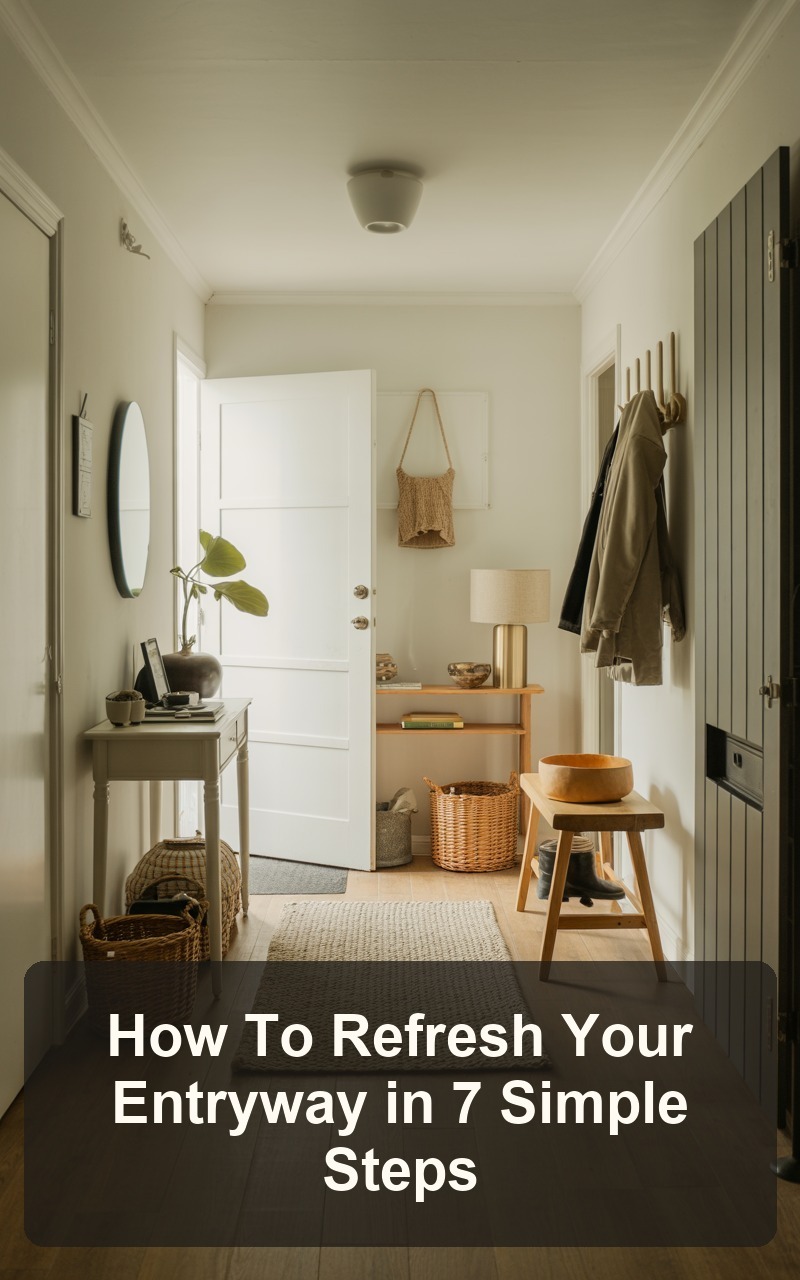
Your entryway has a surprisingly difficult job. It has to welcome guests, catch the daily clutter, survive muddy shoes, and still look calm when you walk through the door at the end of the day. The good news is that you do not need a grand hallway to make it work beautifully.
This guide explains how to refresh your entryway in seven simple steps, with practical storage, better flow, warmer lighting, and a few personal touches that make the space feel like part of your home instead of a dumping ground with a front door.
Before you begin, think of the entryway as a working zone first and a styling moment second. It needs to absorb the messy parts of real life, but it should also give you a small sense of relief when you arrive home. That balance is what makes the finished space feel thoughtful rather than overdecorated.
Step 1: Clear The Drop Zone
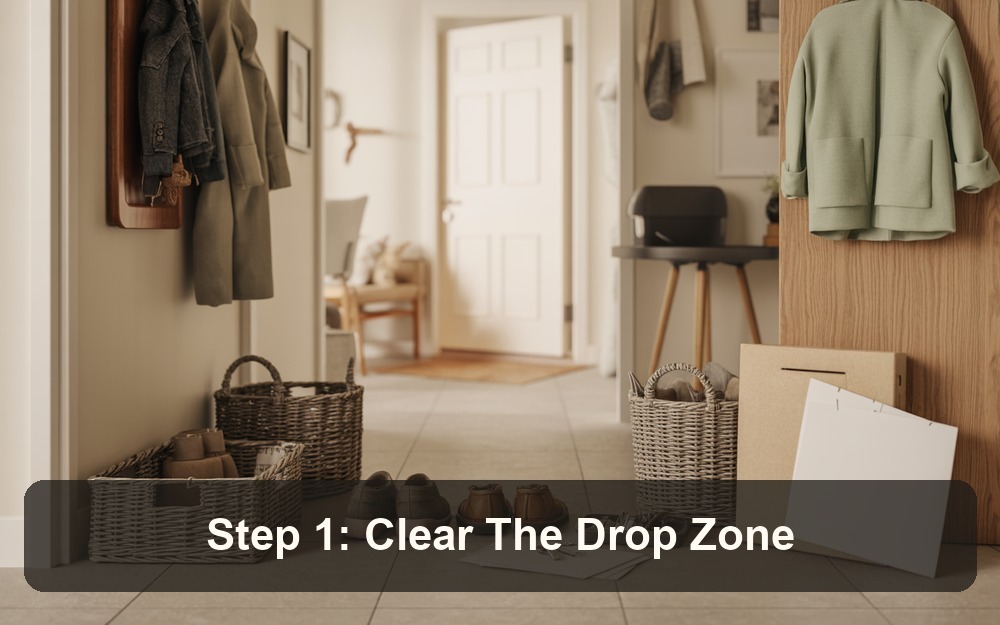
Start by removing everything that has drifted into the entryway: shoes, coats, bags, post, keys, dog leads, reusable bags, and the mysterious object everyone steps over but nobody claims. Put similar items together so you can see what the space actually needs to hold.
If you are planning a wider refresh, statement pieces for guests is worth keeping open alongside this guide.
- Keep daily essentials close to the door.
- Move occasional items to cupboards or bedrooms.
- Give donations, returns, and parcels a temporary basket.
This edit matters because storage only works when it matches real life. If six pairs of shoes land by the door every day, pretending one tiny tray will solve it is just optimistic decorating.
Step 2: Map The Traffic Flow
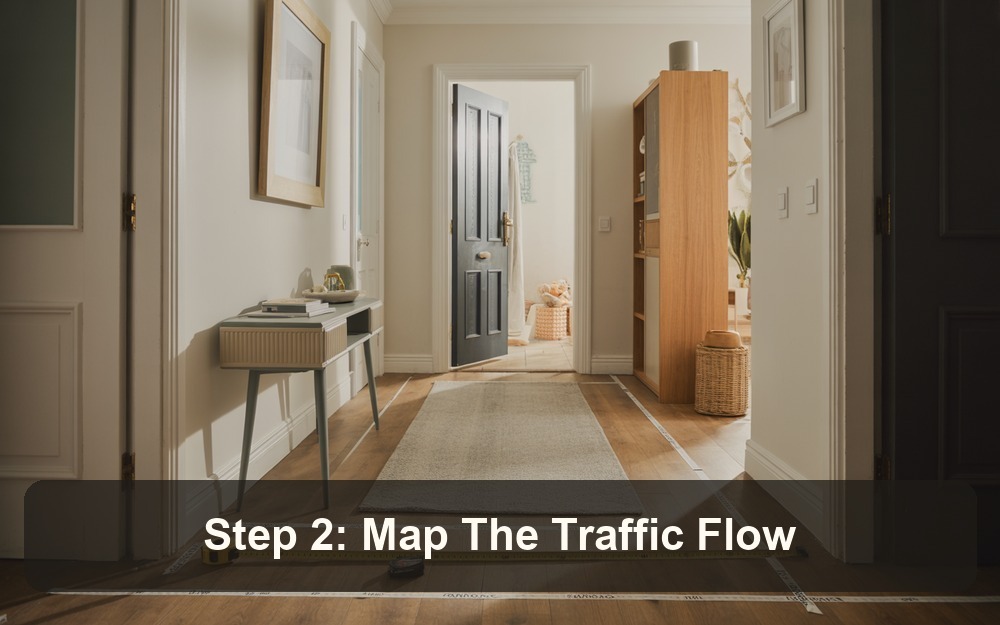
Before adding furniture, watch how people move through the entrance. Open the door fully, carry a bag through the hallway, and check where shoes naturally come off. You want the refreshed entryway to support movement, not create a stylish obstacle course.
A slim console can be brilliant in a narrow hallway, but only if there is still enough room to pass comfortably. In a wider entrance, a bench or small cabinet may make more sense. The goal is to keep the walking path clear while giving everyday items a proper landing place.
If you are unsure, mark furniture sizes with painter tape before moving anything in. Live with the outline for a day and see whether bags, school shoes, prams, or shopping still pass through easily. A layout that survives a busy morning is usually the right one.
Step 3: Add Smart Storage
You can also borrow details from genius storage solutions when you are refining the final look.
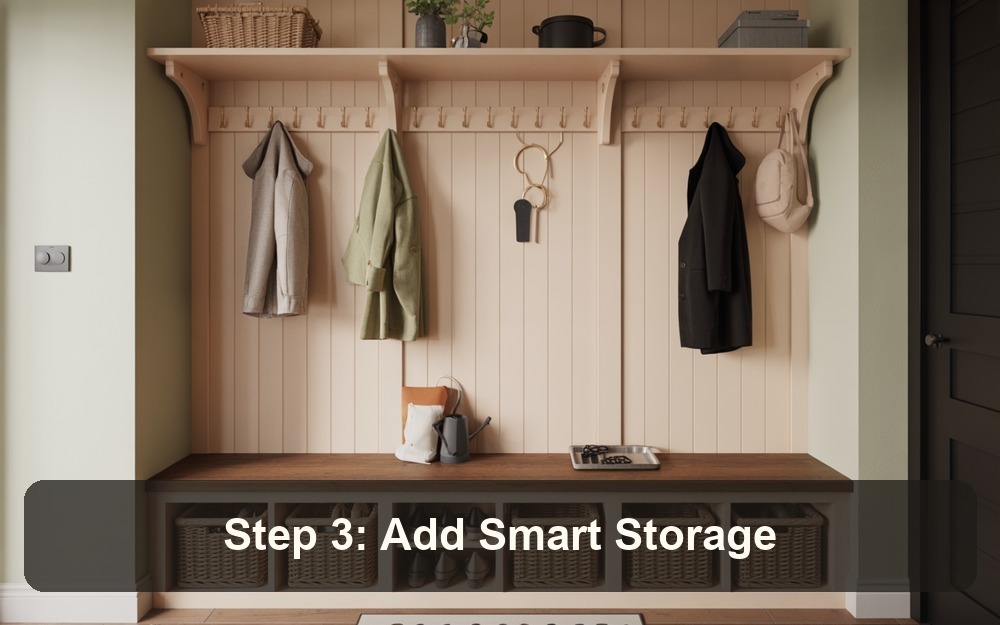
Once you know what needs storing, choose pieces that make the easiest habit the tidiest one. Hooks are better than hangers for coats used every day. Baskets are forgiving for shoes. A shallow tray keeps keys from wandering. A bench helps if children, guests, or tired adults need somewhere to sit.
If you like practical but pretty organization, borrow ideas from these stylish entryway ideas. For very small spaces, vertical storage is often the secret: hooks, wall shelves, and narrow cabinets do more work than bulky furniture.
Try to avoid storage that needs perfect folding or daily discipline. Entryways are transition spaces, so the best systems are quick and forgiving. A basket that hides trainers in two seconds will get used. A tiny divided box that requires everyone to behave like a showroom assistant probably will not.
Step 4: Use A Mirror With Purpose
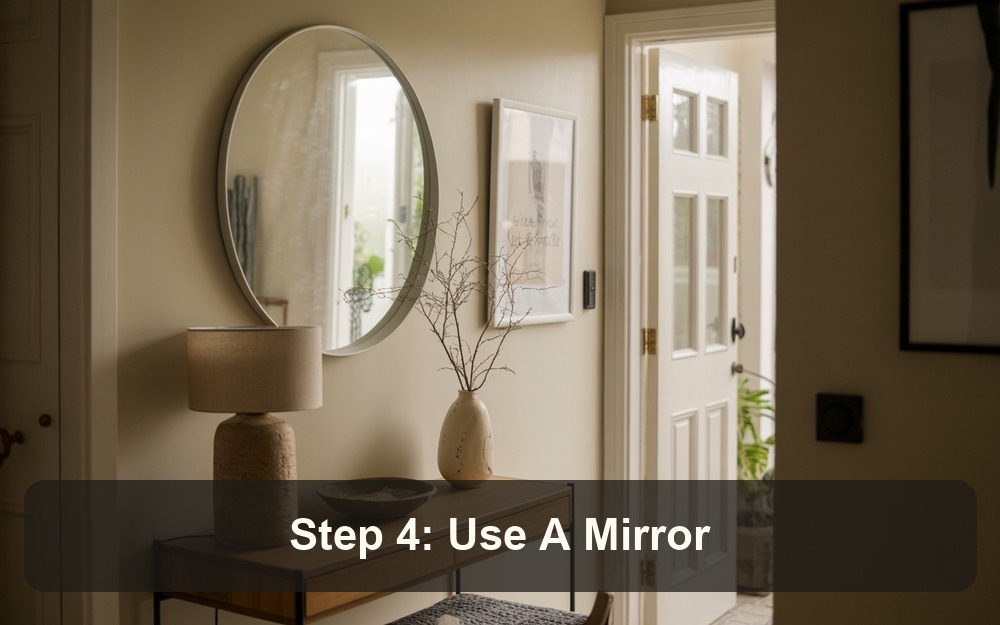
A mirror is useful for the last check before leaving, but it can also make an entryway feel brighter and wider. Hang it where it catches natural light or reflects a tidy view, not a messy corner or the inside of a coat cupboard.
- Choose a round mirror to soften a narrow hallway.
- Use a tall mirror if you need a full-length check.
- Keep the console below it shallow and edited.
Mirrors also count as statement pieces, especially in small spaces. If you want a bolder focal point, these statement piece ideas offer more ways to create impact without filling the floor.
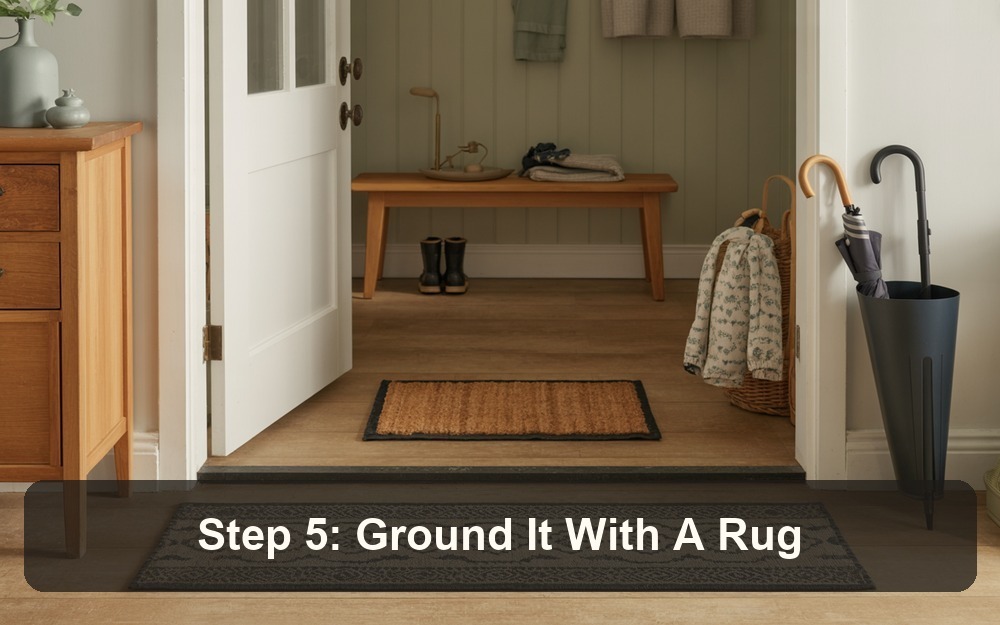
Step 5: Ground It With A Rug
For a related idea you can adapt in the same space, see stylish entryway ideas.
A rug or runner makes the entry feel intentional, but this is not the place for anything precious. Choose a durable, washable, or low-pile option that can handle shoes, umbrellas, and daily traffic. Pattern is helpful because it hides the tiny marks of real life.
Measure before buying, and leave enough floor visible around the edges so the rug looks deliberate rather than squeezed in. If your entry opens into a living area, repeat one color from the nearby room so the transition feels smooth.
Do not forget the practical layer at the door itself. A sturdy doormat outside and a washable runner inside will protect the floor better than one pretty rug trying to do everything. This is especially useful in family homes where wet shoes rarely wait politely.
Step 6: Layer Lighting And Scent
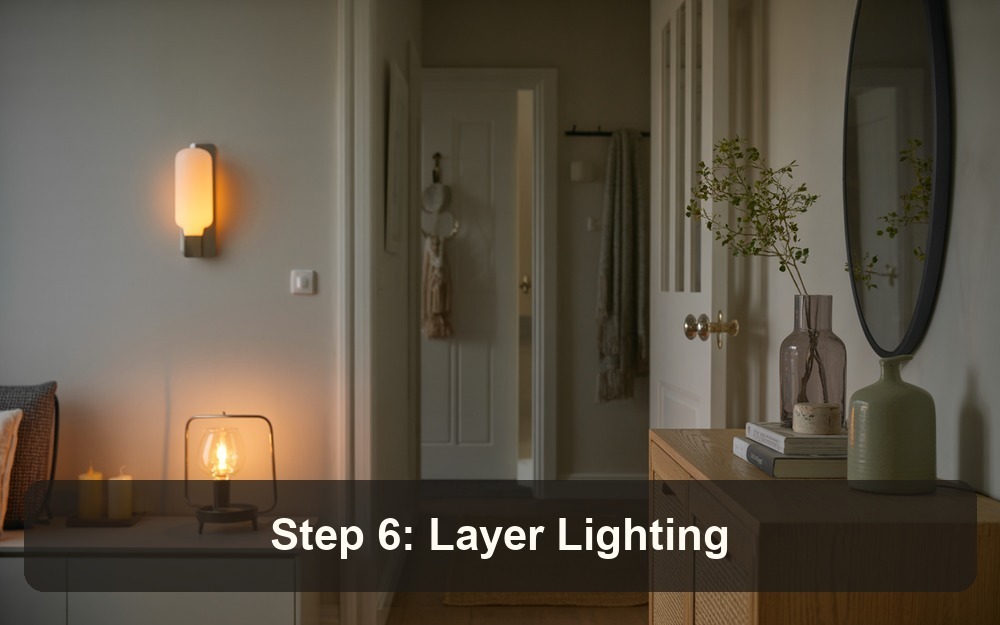
Entryways often rely on one overhead light, which can feel harsh at night. Add warmth with a table lamp, wall sconce, picture light, or a low-glow bulb that makes the space feel welcoming when you come home. Lighting is one of the fastest ways to make a small area feel designed.
Scent should be subtle. A reed diffuser, candle, or fresh greenery can work, but avoid anything so strong it greets visitors before you do. For broader lighting inspiration, these kitchen lighting ideas translate well to entryways when scaled down.
Warm bulbs make the biggest difference in the evening. If your overhead light is cool or harsh, even a small lamp on a console can soften the whole entrance. The aim is a gentle glow that helps the space feel settled, not a dramatic spotlight on the shoe basket.
A useful next read is console table styling if you want another angle on this part of the project.
Step 7: Finish With Personality
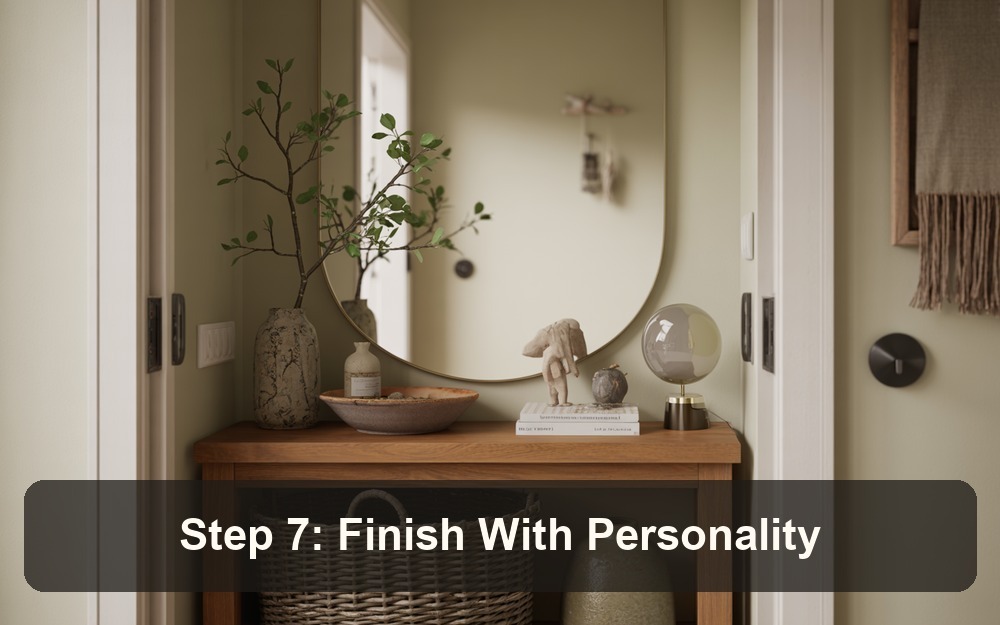
The final layer should make the entry feel like your home. Add art, a small plant, a meaningful bowl, a seasonal branch, or a framed photo. Keep it restrained so the practical pieces still have room to work.
- Repeat one material, such as oak, brass, or black metal.
- Keep one clear surface for keys or post.
- Change small seasonal details instead of restyling everything.
If you enjoy seasonal updates, these simple spring decor ideas can help you refresh the mood without buying new furniture. For extra practical guidance, visit Better Homes & Gardens small entryway ideas.
Final Thoughts
A refreshed entryway should make leaving and coming home easier. Clear the clutter, respect the traffic flow, choose storage around real habits, and then layer in mirror, rug, lighting, and personality. When the practical pieces are working, the pretty details finally have room to shine.
Once the main pieces are in place, give the entryway a quick reset each week. Empty the tray, return stray coats, shake the rug, and remove anything that belongs elsewhere. Five quiet minutes will keep the whole refresh working long after the initial styling glow wears off.
