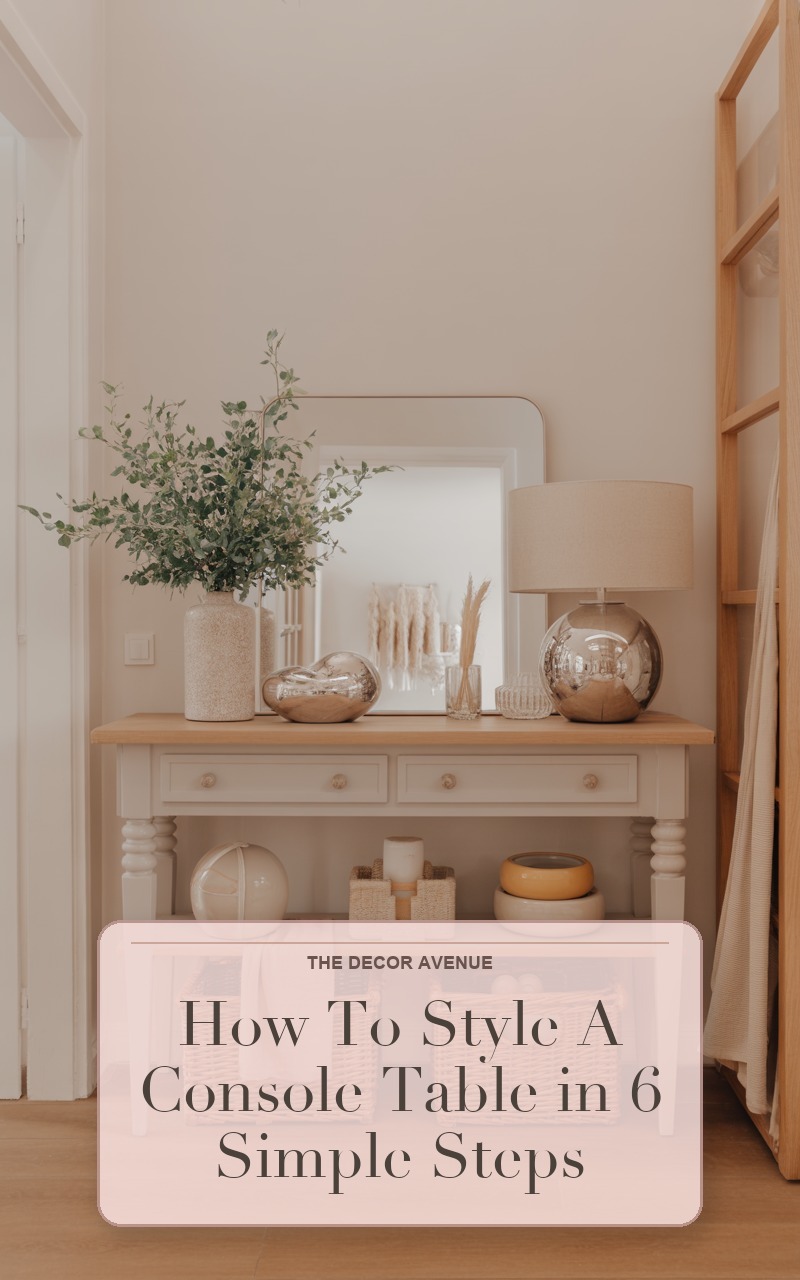
A console table is small enough to seem simple, but it can quietly shape the whole mood of a hallway, living room, landing or dining space. Style it well and it becomes useful, welcoming and polished. Style it badly and it becomes a narrow shelf for keys, receipts and one lonely candle.
This guide walks through how to style a console table in six simple steps, with a practical approach that still leaves room for personality. The aim is a display that looks intentional without feeling stiff, expensive or overworked.
It also helps to think of the console as a small story about the room. The materials, colours and objects should hint at the rest of your home, while the layout should make daily life easier. That combination is what keeps a styled surface from feeling like a shop display.
Step 1: Choose The Console’s Job
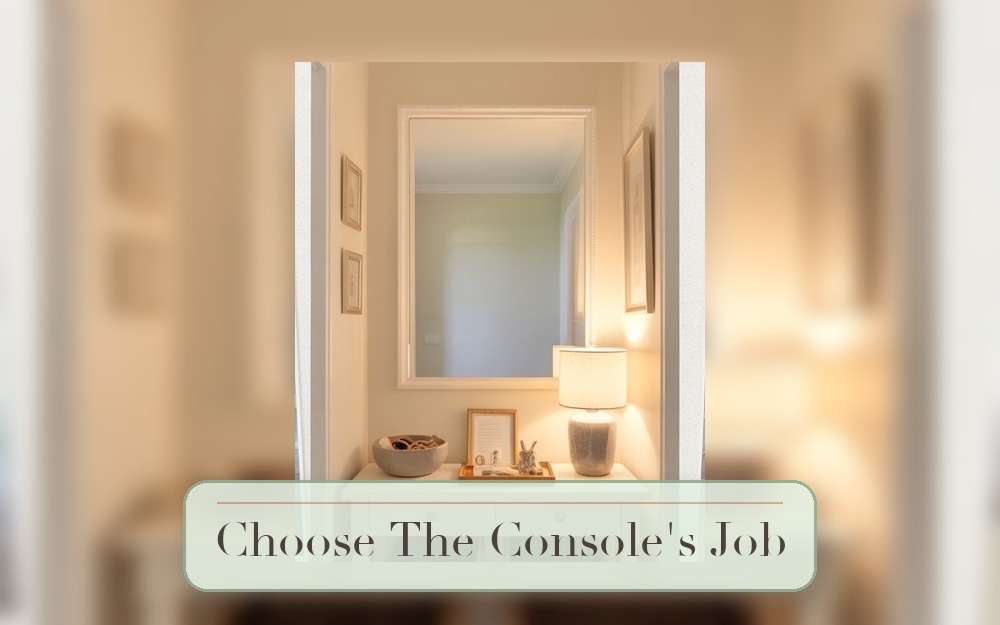
Before you add a lamp or vase, decide what the console table needs to do. In an entryway, it may need to catch keys, post, sunglasses and dog leads. Behind a sofa, it might hold lamps and books. In a dining room, it could work as a serving surface or a place for flowers.
This decision keeps the styling honest. A console that has to work every day needs clear landing space and hidden storage. A purely decorative console can be more sculptural. Most homes need a bit of both, which is where the fun starts.
If you are planning a wider refresh, bookshelf styling ideas is worth keeping open alongside this guide.
If you are not sure which direction to take, watch what naturally lands there for a few days. Keys, post and sunglasses are clues, not failures. Build the arrangement around those habits first, then make the practical pieces beautiful.
- Use a tray or bowl for small daily items.
- Add baskets underneath if shoes, scarves or bags gather nearby.
- Leave at least one clear patch of surface for real life.
Step 2: Anchor It With Art Or A Mirror
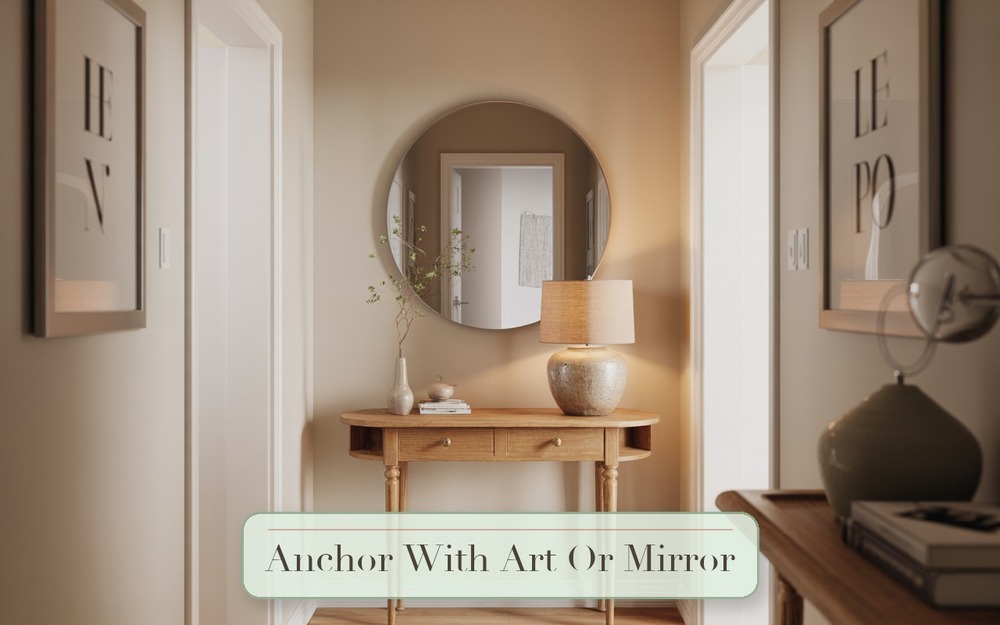
A console table usually looks best when it has something strong above it. That might be a mirror, a large artwork, a pair of framed prints or even a wall sconce. Without an anchor, the table can look like it is floating awkwardly against the wall.
Mirrors are especially useful in hallways because they bounce light and give you a last check before leaving. Artwork adds more personality and can set the colour story for the whole arrangement. Either way, keep the piece visually connected to the table rather than hanging it too high.
As a rough guide, leave a modest gap between the tabletop and the bottom of the mirror or frame. Too much wall space can make the pieces feel disconnected, while a close relationship makes the whole vignette read as one deliberate feature.
For more entrance inspiration, these stylish entryway ideas are a helpful companion when you want the whole area to feel considered.
You can also borrow details from statement pieces for guests when you are refining the final look.
Step 3: Build Height With Lighting
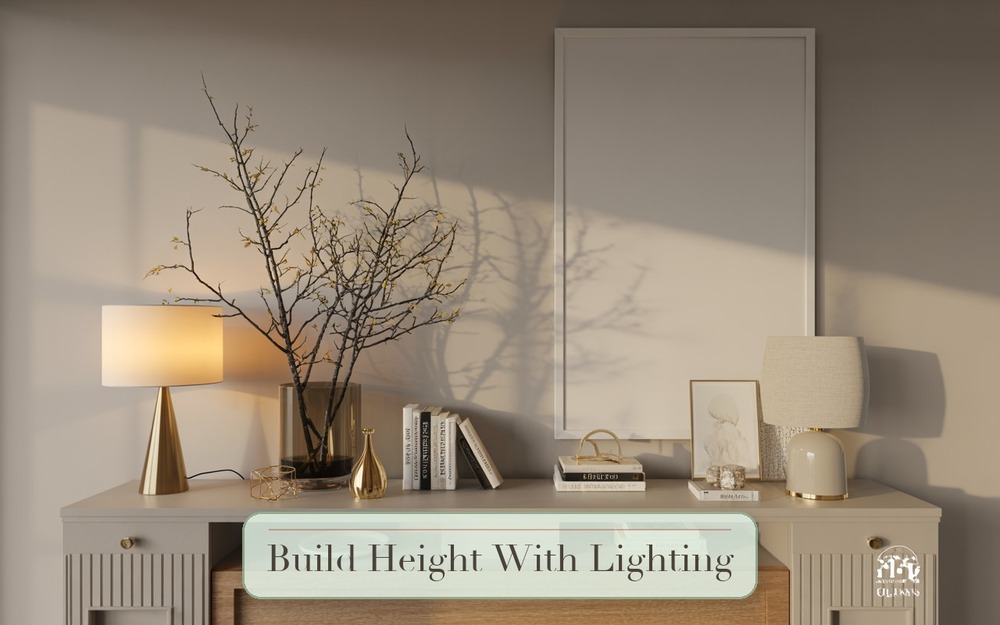
Height gives a console display presence, and lighting is one of the most useful ways to create it. A table lamp adds glow in the evening, balances the wall above and makes the console feel like a proper design feature rather than spare furniture.
If the console is wide, a pair of lamps can create symmetry. If the table is narrow, one lamp balanced by a tall vase or branch arrangement often feels lighter. The key is to vary height without making the surface feel crowded.
- Choose warm bulbs for a softer welcome.
- Keep lamps proportional to the console width.
- Use a tall vase if there is no socket nearby.
Lighting changes the feel of small spaces quickly, and the same principles behind these kitchen lighting ideas can be scaled down for a hallway or living room console.
Step 4: Layer Books, Bowls And Baskets
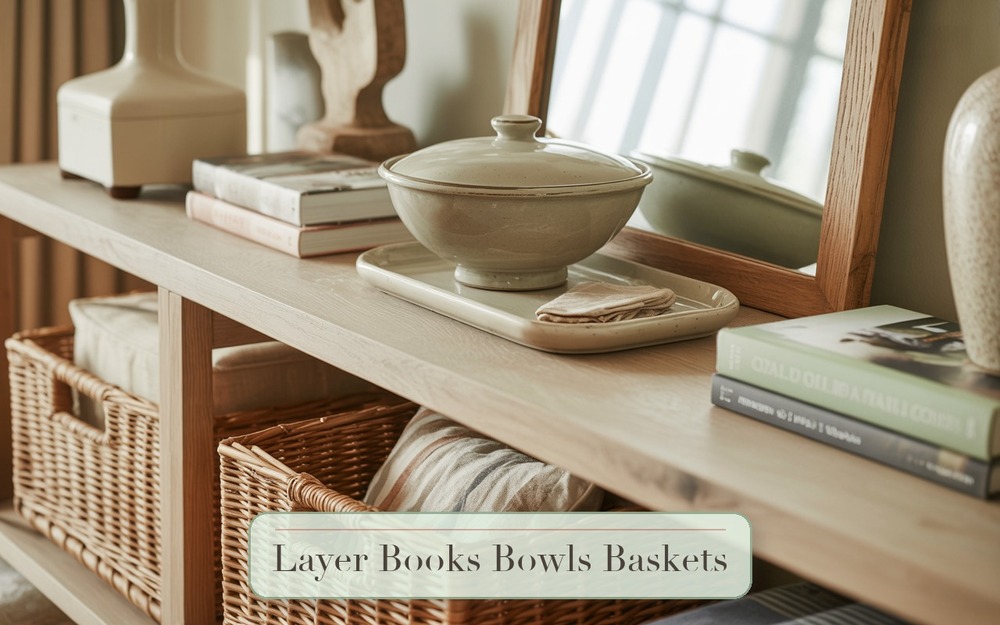
Layering is what makes a console table feel styled rather than simply decorated. Start with a few stacked books to create height, add a bowl or tray for function, then bring in a box, basket or small sculptural object for texture. Think in groups, not clutter.
Books are brilliant because they lift smaller items and add a relaxed collected feel. Bowls and trays are useful because they contain the everyday bits that would otherwise scatter. Baskets underneath can hide shoes, throws or seasonal accessories while adding warmth.
For a related idea you can adapt in the same space, see stylish entryway ideas.
If you enjoy this type of arranged surface, you may also like these coffee table styling tips, since many of the same scale and layering rules apply.
Step 5: Add Texture And Greenery
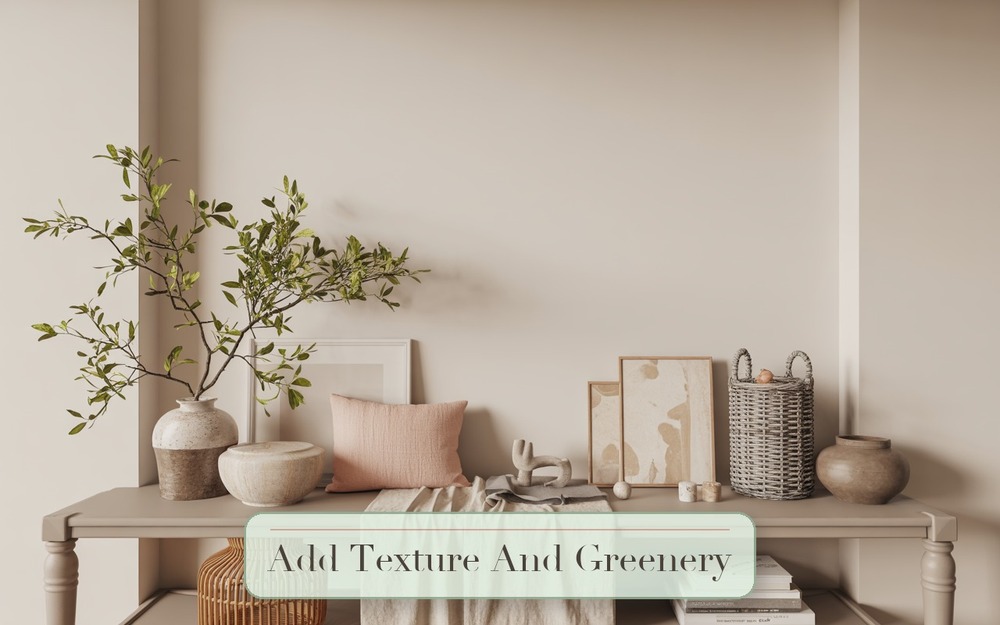
Texture stops a console table from looking flat. A leafy branch, linen runner, rattan basket, handmade ceramic or wooden bowl can soften hard lines and make the arrangement feel more natural. You do not need all of them; two or three textures are plenty.
Greenery is often the easiest finishing touch. A vase of branches looks sculptural, lasts longer than flowers and adds height without feeling fussy. If the console sits in a darker hallway, choose convincing faux stems or dried grasses rather than fighting the light.
Keep the colours connected to the rest of the room. These home colour scheme ideas are useful if you want the console to feel pulled together instead of random.
Step 6: Edit The Final Arrangement
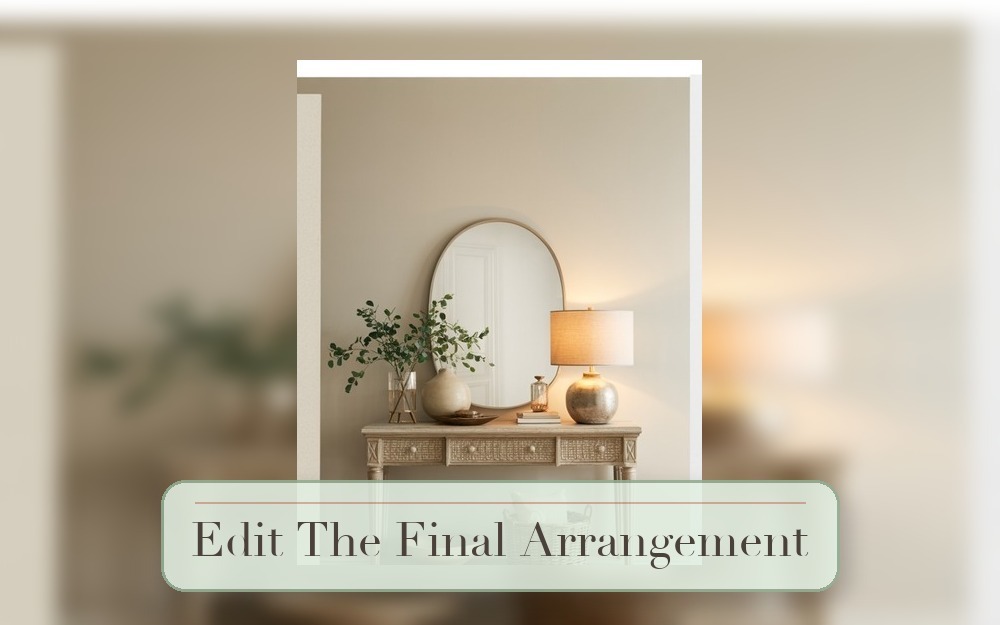
The final step is editing. Stand back and check the console from the doorway, the sofa or wherever you see it most often. If everything is the same height, add one taller piece. If the surface feels busy, remove the smallest item. If it looks too perfect, add one useful object that makes it feel lived in.
A useful next read is entryway refresh ideas if you want another angle on this part of the project.
Editing is also seasonal. In spring, a branch or lighter ceramic might be enough. In winter, you may prefer a warmer lamp, darker bowl or textured basket. Keep the bones the same and swap only the easiest pieces.
A well-styled console table usually has a clear rhythm: one anchor above, one or two taller pieces, a few lower layers, a practical landing spot and enough empty space for the eye to rest. That empty space is not wasted; it is what makes the whole display feel calm.
- Repeat one material, such as brass, oak or ceramic.
- Keep daily items contained in a tray or bowl.
- Remove anything that does not serve the look or the function.
For more expert inspiration, see Homes & Gardens’ console table styling advice and Architectural Digest’s console decor ideas. If you want a bolder focal point nearby, these statement piece ideas can help you choose one strong moment rather than lots of small ones.
Final Thoughts
Styling a console table is really about balance: useful but pretty, edited but personal, calm but not bare. Start with the job, anchor the wall, build height, layer practical pieces, add texture and greenery, then edit until it feels effortless. When the console works for your routine and still makes you smile when you pass it, you have got it right.
